The Executives
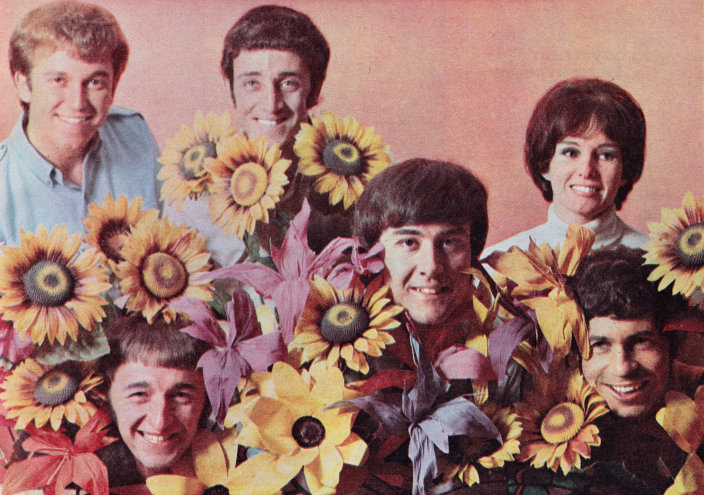
The Executives might well be remembered as the band with the right sound but the wrong image. At their late sixties peak, they were singing Blood, Sweat & Tears songs while looking like The Platters! In an era dominated by growing opposition to the Vietnam War, psychedelic clothing, Hair (and long hair!) and the post-Pepper Beatles, The Executives always seemed several steps behind, yet musically they were way out in front; one of the most multi-talented, musically ambitious and distinctive outfits of the day.
Today they are remembered—when they are remembered at all—as a vocal group, perhaps because that was how they first appeared on Brian Henderson’s Bandstand back in 1967, but the truth is, they were arguably the most musically capable band on the Sydney live circuit. The musical background of the band was staggering. Publicity from the era states proudly that, between them, they played 31 instruments—alto sax, balalaika, baritone sax, bass, bass sax, clarinet, cornet, drums, flute, glockenspiel, guitars, harmonica, harpsichord, lute, mandolin, marimbaphone, melodica, organ, pacific island ethnic drums, piano, recorder, rhythm percussion, soprano sax, spinet, tenor sax, trombone, trumpet, ukulele, vibes, violin and xylophone—and they used that musical mastery to good effect on their records, which have an artistry and a polish the equal of anything coming out of Los Angeles or London at the time.
Great musicians then, and great singers, but they also showed great skill in choosing songs and, later, at writing them. They all sang—exquisite, perfectly executed vocal harmonies were their trademark—resulting in fabulous song arrangements that often improved upon the originals. But while they had no trouble cracking the market in their Sydney hometown, success eluded them on a national level, particularly in the important music centre of Melbourne where, despite three promising tours, a perplexing lack of radio airplay prevented them from achieving the status they deserved.
Today they are remembered—when they are remembered at all—as a vocal group, perhaps because that was how they first appeared on Brian Henderson’s Bandstand back in 1967, but the truth is, they were arguably the most musically capable band on the Sydney live circuit. The musical background of the band was staggering. Publicity from the era states proudly that, between them, they played 31 instruments—alto sax, balalaika, baritone sax, bass, bass sax, clarinet, cornet, drums, flute, glockenspiel, guitars, harmonica, harpsichord, lute, mandolin, marimbaphone, melodica, organ, pacific island ethnic drums, piano, recorder, rhythm percussion, soprano sax, spinet, tenor sax, trombone, trumpet, ukulele, vibes, violin and xylophone—and they used that musical mastery to good effect on their records, which have an artistry and a polish the equal of anything coming out of Los Angeles or London at the time.
Great musicians then, and great singers, but they also showed great skill in choosing songs and, later, at writing them. They all sang—exquisite, perfectly executed vocal harmonies were their trademark—resulting in fabulous song arrangements that often improved upon the originals. But while they had no trouble cracking the market in their Sydney hometown, success eluded them on a national level, particularly in the important music centre of Melbourne where, despite three promising tours, a perplexing lack of radio airplay prevented them from achieving the status they deserved.
History
1959-66: Formation and first release
The lineage of The Executives dates back to 1959, when 18-year-old Brian King formed a semi-professional, three-piece dance band called The Kingwoods. The name of the band combined Brian’s surname with the surname of the drummer, 18-year-old Bob Woodhill. Brian and Bob had been close friends ever since they met at High School in 1953.
Brian was born in Helensburgh, a small coal mining town situated between Sydney and Wollongong, NSW. Brian started musical training at the age of five and gave his first public piano recital at the age of eight. He formed his first semi-professional band at 13.
Joining them on guitar was 19-year-old Dudley Hood. Dudley had struck up a friendship with Brian after moving to Helensburgh from Moss Vale in the mid-fifties. His initial interest was music and he was greatly influenced from a very early age by his uncle who played Latin jazz. After completing school, Dudley commenced formal music studies, eventually earning a Bachelor of Music (Guitar) degree.
In 1958, after completing high school, Brian started working at the Australian Gas Light Company in Sydney where he met Carole Edgar. The two formed a friendship that blossomed into romance a few years later
.
Carole was born in London, England and had migrated to Australia when she was four years old. Carole was an attractive brunette, who, while at school, was in both the drama club and opera group. However, it was not until after Carole and Brian married in late 1963 that Carole became a fully-fledged member of the band.
In 1963, the band added its first regular singer, Keith Leslie. Keith was also a saxophonist, which was an added bonus to the band. His inclusion saw the band move from Floyd Cramer-esque piano dance numbers towards more contemporary music.
Between 1962 and 1965, the band had a few different bassists, including Les Young—better known for his later work with popular Sydney group The Questions—before settling with Brian’s younger brother, Gary King.
In August 1966, Bob introduced the band, then known as The Associates, to Harry Widmer. Harry signed on as their manager after attending one of their Sydney performances and immediately convinced all but Bob to turn professional. Bob left the band the following month and was replaced by Rhys Clark.
Rhys was born in Auckland, New Zealand. His career as a drummer began as a teenager in 1963 when he joined The Zodiacs, followed by The Chequers (1964) and The Silhouettes (1965-66). A recording contract with Allied International Records saw The Silhouettes record three local hit singles during Rhys’ tenure, including the 1966 national hit and Loxenne Gold Disc Award nominee ‘Theme From The Endless Summer’. Keen to turn professional, Rhys, like many New Zealand musicians, decided to move to Australia, arriving in July 1966.
Coinciding with the addition of Rhys, the band changed their name to The Executives, a name chosen by Harry and the others in part to avoid confusion with the US band The Association.
Seeking a unique appearance in an era of Beatles look-alikes, Harry devised an adult image of designer suits and ties befitting business executives – the best in the business. To cement the image, he had promotional photographs taken in office settings.
Almost immediately, Harry arranged an audition with prominent A&R man, Pat Aulton. Pat had just been appointed to the Festival Records production team and even at that time had a reputation for being Australia’s leading pop producer. Based on Pat’s positive impression, Festival Records signed the band to a five-year contract in November.
The band’s first single was ’Wander Boy’ b/w ‘You’re Bad’, released in December, a mere three months after turning professional!
Both tracks were faithful copies of the originals but in a more infectious upbeat style. Keith had the lead vocal on ‘Wander Boy’ while Carole had the lead on ‘You’re Bad’.
Radio DJs were reportedly enthusiastic; however, despite admirable airplay, the single failed to chart in Sydney, although it did manage to reach #15 on Wollongong’s South Coast Times top 100 on 12 January 1967!
Its lack of success led Festival Records to consider dropping the band. Consequently, Harry created Cordon Bleu Productions, which would take care of production costs and then lease the finished tapes back to Festival Records.
Brian was born in Helensburgh, a small coal mining town situated between Sydney and Wollongong, NSW. Brian started musical training at the age of five and gave his first public piano recital at the age of eight. He formed his first semi-professional band at 13.
Joining them on guitar was 19-year-old Dudley Hood. Dudley had struck up a friendship with Brian after moving to Helensburgh from Moss Vale in the mid-fifties. His initial interest was music and he was greatly influenced from a very early age by his uncle who played Latin jazz. After completing school, Dudley commenced formal music studies, eventually earning a Bachelor of Music (Guitar) degree.
In 1958, after completing high school, Brian started working at the Australian Gas Light Company in Sydney where he met Carole Edgar. The two formed a friendship that blossomed into romance a few years later
.
Carole was born in London, England and had migrated to Australia when she was four years old. Carole was an attractive brunette, who, while at school, was in both the drama club and opera group. However, it was not until after Carole and Brian married in late 1963 that Carole became a fully-fledged member of the band.
In 1963, the band added its first regular singer, Keith Leslie. Keith was also a saxophonist, which was an added bonus to the band. His inclusion saw the band move from Floyd Cramer-esque piano dance numbers towards more contemporary music.
Between 1962 and 1965, the band had a few different bassists, including Les Young—better known for his later work with popular Sydney group The Questions—before settling with Brian’s younger brother, Gary King.
In August 1966, Bob introduced the band, then known as The Associates, to Harry Widmer. Harry signed on as their manager after attending one of their Sydney performances and immediately convinced all but Bob to turn professional. Bob left the band the following month and was replaced by Rhys Clark.
Rhys was born in Auckland, New Zealand. His career as a drummer began as a teenager in 1963 when he joined The Zodiacs, followed by The Chequers (1964) and The Silhouettes (1965-66). A recording contract with Allied International Records saw The Silhouettes record three local hit singles during Rhys’ tenure, including the 1966 national hit and Loxenne Gold Disc Award nominee ‘Theme From The Endless Summer’. Keen to turn professional, Rhys, like many New Zealand musicians, decided to move to Australia, arriving in July 1966.
Coinciding with the addition of Rhys, the band changed their name to The Executives, a name chosen by Harry and the others in part to avoid confusion with the US band The Association.
Seeking a unique appearance in an era of Beatles look-alikes, Harry devised an adult image of designer suits and ties befitting business executives – the best in the business. To cement the image, he had promotional photographs taken in office settings.
Almost immediately, Harry arranged an audition with prominent A&R man, Pat Aulton. Pat had just been appointed to the Festival Records production team and even at that time had a reputation for being Australia’s leading pop producer. Based on Pat’s positive impression, Festival Records signed the band to a five-year contract in November.
The band’s first single was ’Wander Boy’ b/w ‘You’re Bad’, released in December, a mere three months after turning professional!
Both tracks were faithful copies of the originals but in a more infectious upbeat style. Keith had the lead vocal on ‘Wander Boy’ while Carole had the lead on ‘You’re Bad’.
Radio DJs were reportedly enthusiastic; however, despite admirable airplay, the single failed to chart in Sydney, although it did manage to reach #15 on Wollongong’s South Coast Times top 100 on 12 January 1967!
Its lack of success led Festival Records to consider dropping the band. Consequently, Harry created Cordon Bleu Productions, which would take care of production costs and then lease the finished tapes back to Festival Records.
1967: The rise
In late May 1967, the band released their second single: ‘My Aim Is To Please You’ b/w ‘Bad Reputation’. It was also the band’s first international release; firstly, in New Zealand through Festival Records in August, and secondly, in the US and Canada through United Artists Records in March 1968.
Carole sings ‘My Aim Is To Please You’ in a rendition that is far superior to Kenny’s original. On ‘Bad Reputation’, Keith and the band (including Pat) provided a more modern and commercial sounding vocal than the original. The slightly laid-back tempo also removed some of the aggression heard in the original.
Radio DJs immediately added ‘My Aim Is To Please You’ to their hit prediction lists, forecasting the single to make The Executives a household name. And it would be a fair assessment: ‘My Aim Is To Please You’ reached #4 in Sydney (2UE – 2 August), #3 in Brisbane (4IP – 21 July), #33 in Melbourne (3DB – 26 August), #7 in Canberra (2CA – 31 August) and even #47 in Hobart (7HO – 5 July)! In the USA, ‘My Aim Is To Please You’ was a solid hit in Louisville, Kentucky, reaching #2 on the WKLO chart in May 1968!
This impressive performance could be attributed, in part, to the American sound of the record. With its tight harmonies, Australian listeners thought they were hearing the latest from The Mamas & The Papas before discovering that it was actually a “home grown” product.
Capitalising on the chart success of ‘My Aim Is To Please You’, the band performed extensively, including the 2UW/Smith’s Dance Spectacular at the Sydney Trocadero in August.
They headed back into the studio and in August, hot on the heels of the success of ‘My Aim Is To Please You’, they released their next single: ‘Sit Down, I Think I Love You’ b/w ‘Don’t You Sometimes, Baby, Find That I’m On Your Mind’.
Musically, ‘Sit Down, I Think I Love You’ was a close copy of the Van Dyke Parks-arranged Mojo Men recording. However, where it excelled was, again, with the lush harmonies of Carole and the boys.
‘Sit Down, I Think I Love You’ reached #3 in Sydney (2UW – 8 November), #13 in Brisbane (4BC – 29 November), #21 in Canberra (2CA – 29 November) and #49 in Hobart (7HO – 27 September). While becoming their biggest selling single in NSW, in other states ‘Sit Down, I Think I Love You’ did not perform as well as their previous single.
In October, the band travelled south to attempt to crack the Melbourne scene. Unfortunately, their reception wasn't as warm as hoped. Part of the problem for the band was the differing nature of the music scene between Sydney and Melbourne. Put simply, Melbourne had thriving discotheques and dances, with a stronger focus on pop for the teenagers whereas Sydney’s nightlife consisted more of nightclubs and lounges, with lavish décor, resulting in a somewhat Vegas-like scene suited to adults. The Executives, with their sound and image, were perfectly suited to their native Sydney, but struggled against established Melbourne pop bands. Add to that an ingrained reluctance from Melbourne audiences to accept Sydney groups and it is clear that the band would have a hard time ahead if they were to succeed in Melbourne.
Just before Christmas, on 23 December, the band made its first major TV appearance, lip-syncing to ‘Sit Down, I Think I Love You’ on Brian Henderson’s Bandstand. Little did the band know that this would be the first of many appearances they would make on the popular musical/variety show over the next two years.
Carole sings ‘My Aim Is To Please You’ in a rendition that is far superior to Kenny’s original. On ‘Bad Reputation’, Keith and the band (including Pat) provided a more modern and commercial sounding vocal than the original. The slightly laid-back tempo also removed some of the aggression heard in the original.
Radio DJs immediately added ‘My Aim Is To Please You’ to their hit prediction lists, forecasting the single to make The Executives a household name. And it would be a fair assessment: ‘My Aim Is To Please You’ reached #4 in Sydney (2UE – 2 August), #3 in Brisbane (4IP – 21 July), #33 in Melbourne (3DB – 26 August), #7 in Canberra (2CA – 31 August) and even #47 in Hobart (7HO – 5 July)! In the USA, ‘My Aim Is To Please You’ was a solid hit in Louisville, Kentucky, reaching #2 on the WKLO chart in May 1968!
This impressive performance could be attributed, in part, to the American sound of the record. With its tight harmonies, Australian listeners thought they were hearing the latest from The Mamas & The Papas before discovering that it was actually a “home grown” product.
Capitalising on the chart success of ‘My Aim Is To Please You’, the band performed extensively, including the 2UW/Smith’s Dance Spectacular at the Sydney Trocadero in August.
They headed back into the studio and in August, hot on the heels of the success of ‘My Aim Is To Please You’, they released their next single: ‘Sit Down, I Think I Love You’ b/w ‘Don’t You Sometimes, Baby, Find That I’m On Your Mind’.
Musically, ‘Sit Down, I Think I Love You’ was a close copy of the Van Dyke Parks-arranged Mojo Men recording. However, where it excelled was, again, with the lush harmonies of Carole and the boys.
‘Sit Down, I Think I Love You’ reached #3 in Sydney (2UW – 8 November), #13 in Brisbane (4BC – 29 November), #21 in Canberra (2CA – 29 November) and #49 in Hobart (7HO – 27 September). While becoming their biggest selling single in NSW, in other states ‘Sit Down, I Think I Love You’ did not perform as well as their previous single.
In October, the band travelled south to attempt to crack the Melbourne scene. Unfortunately, their reception wasn't as warm as hoped. Part of the problem for the band was the differing nature of the music scene between Sydney and Melbourne. Put simply, Melbourne had thriving discotheques and dances, with a stronger focus on pop for the teenagers whereas Sydney’s nightlife consisted more of nightclubs and lounges, with lavish décor, resulting in a somewhat Vegas-like scene suited to adults. The Executives, with their sound and image, were perfectly suited to their native Sydney, but struggled against established Melbourne pop bands. Add to that an ingrained reluctance from Melbourne audiences to accept Sydney groups and it is clear that the band would have a hard time ahead if they were to succeed in Melbourne.
Just before Christmas, on 23 December, the band made its first major TV appearance, lip-syncing to ‘Sit Down, I Think I Love You’ on Brian Henderson’s Bandstand. Little did the band know that this would be the first of many appearances they would make on the popular musical/variety show over the next two years.
1968: Building upon success
The band’s next single, ‘It’s A Happening World’ b/w ‘Moving In A Circle’, was released in February 1968.
Keith sings lead on The Executives’ upbeat cover, which, again, takes the original and improves upon it with rich harmonies and layered instrumentation.
The flipside, ‘Moving In A Circle’, was penned by Dudley and Brian, making it the first original composition to be released commercially by the band. Rhys was holidaying back home in Auckland at the time ‘Moving In A Circle’ was recorded, so the drums were aptly handled by fellow Kiwi drummer Ray Mulholland of The Dave Miller Set.
While making the prediction lists of many radio stations across the country, ‘It’s A Happening World’ failed to repeat the band’s earlier successes, reaching only #24 in Sydney (22 March) and #34 in Brisbane (4BC – 6 April). It did, however, become the band’s biggest success in Hobart, reaching #28 on the 7HO chart (24 April). It also performed admirably in Perth, where it reached #29 on the 6KY chart (8 March); a notable achievement given the band’s exposure in the west being otherwise limited to a few appearances on Brian Henderson’s Bandstand.
There is no explanation for the single’s lack of success; ‘It’s A Happening World’ was no more out of place than top ten hits ‘Sadie (The Cleaning Lady)’ by Johnny Farnham or ‘The Rain, The Park And Other Things’ by The Cowsills.
February would also see the band’s first line-up changes. Pat felt that The Executives needed to evolve both musically and vocally in order to achieve the success he believed they deserved, so he, Harry and Brian agreed to replace Dudley Hood and Keith Leslie with musicians who would better fit Pat’s vision.
Dudley was the first to leave, replaced at the beginning of the month with Brian Patterson. Brian was born in Kempsey, NSW. He was by all accounts an accomplished guitarist, having joined The Laurel Lea Ensemble as a 17-year-old in 1964, followed by The Blue Beats in 1965. He was with The Blue Beats when they supported tours by Normie Rowe and The Rolling Stones. In August 1966, he joined the remnants of The Vince Maloney Sect after Vince left, briefly backing singer Peter Doyle. Two months later, he joined singer Tony Worsley’s new backing group, The New Blue Jays.
Towards the end of February, Keith was replaced with Gino Cunico. Gino was born in Sydney, NSW. He commenced his musical career as a boy vocalist at nine years old and by 15 had appeared on most of Australia’s top television music shows. As a 13 year old in 1962, he graced the cover of Teenagers’ Weekly and in August 1962 released his first single, ‘Aw Please Daddy’ b/w ‘Eeny Meeny Miney Moe’. He had most recently formed The Gino Affair in 1967.
In April, Festival Records released the band’s debut album, simply titled The Executives. The album featured all eight singles sides plus ‘Fly, Through This Happening World’, a track written by Pat for QANTAS. To round out the album, three new tracks were included. ‘Dedicated To The One I Love’—a Bandstand favourite—was given a strong rendition by Carole, with multi-tracked vocals and exquisite harmonies by the band. Herb Hancock’s jazz standard ‘Watermelon Man’ appears to have been given a new arrangement by Pat rather than relying on one of the many covers of this popular track. It was recorded before the line-up change.
Perhaps the highlight of the album is the moody ‘Friday’s Child’, originally written by Lee Hazlewood and made popular by Nancy Sinatra in 1966. Here, Carole is backed by a soulful-bluesy piano and haunting organ that gives the track a more powerful feel than either Hazlewood’s or Sinatra’s versions.
The album was reviewed favourably in most printed media, going on to become a platinum seller.
The band released its next single, ‘Windy Day’ b/w ‘This Town Ain’t The Same Anymore’, in June.
With Carole singing over music performed entirely by session musicians, ‘Windy Day’ is a near note-for-note copy of the light, old-time sounding original, complete with slide whistle at the end. The only noticeable difference was the addition of ‘ocker’ background vocals, multitracked seamlessly by Pat Aulton.
‘This Town Ain’t The Same Anymore’ is a more serious folk-rock number sung by Gino, lamenting his return to a town long since changed.
‘Windy Day’ would see the band back in the upper levels of the Sydney charts, reaching #8 in Sydney (2UW – 6 September). Again though, it would be largely ignored in other states, reaching only as high as #32 in Canberra (2CA – 19 July) and #49 in Hobart (7HO – 17 July).
Also in June, Gino, Brian Patterson, Gary and Rhys made their collective acting debut, appearing as special guests on TCN9’s Skippy The Bush Kangaroo, in an episode titled The Bushrangers. Brian and Carole did not appear as the casting called only for four members. The four Executives plus actor Fred Sims played the pop group in the episode, which had been recorded three months earlier in March.
In the last week of June, The Executives made their next line-up change. Brian Patterson’s love for the blues would simply prove too strong, so, with no hard feelings, he left the band. He was replaced with Ray Burton, ex-lead guitarist and vocalist with The Questions (along with ex-Kingwoods bassist Les Young) and, most recently, The Dynasty.
Born into a family of entertainers, it is no surprise that Ray’s musical career began at a very young age. By 16, he was touring with The Dave Bridge Quartet. After the quartet split at the beginning of 1963, Ray formed The Telstars and started writing his own songs. His first hit song was a surf instrumental released in December 1963 titled ‘Reef Ride’, which, while not setting the local charts on fire (despite favourable reviews), managed to become a hit in, of all places, Switzerland!
After a stint touring outback Australia with The Laurel Lea Ensemble (which also included a young Brian Patterson), Ray joined the masters of harmony, The Delltones, and soon became known for his top tenor voice.
After perfecting harmonies with The Delltones, he replaced Billy Green in The Questions in January 1968, where he immediately found himself playing support to The Who, Small Faces and Paul Jones, who were in Australia for a national tour. When The Questions disbanded the following month, Ray joined Bill Fleming in his new group, The Dynasty.
Ray, with his honed harmony skills, fit the bill perfectly. In addition, he brought exceptional guitar playing and songwriting skills, providing just the injection that The Executives needed.
He introduced the band to the works of the great American songwriter, Jimmy Webb, known for songs such as ‘Up, Up And Away’, ‘By The Time I Get To Phoenix’ and ‘MacArthur Park’. Jimmy’s songs would soon feature prominently in the band’s repertoire.
The Executives headed south in September for another attempt at cracking Melbourne. This time they added top Melbourne nightspots such as the renowned Berties and Catcher to their venue list. Alas, however, again they received a lukewarm reception.
By now, the band had introduced some subtle changes to their image in parallel with the evolution of their music. The trademark conservative suits still featured, but had become largely confined to cabaret and lounge performances. A more contemporary, casual image had been adopted for discos and “teenybopper” performances. The band was also taking special care to tailor the music they played at each performance to suit the audience, with the sophisticated music kept for adult audiences and the more upbeat, pop numbers played for the younger audiences.
In November, The Coca-Cola Company, in conjunction with EMI Australia, produced a promotional EP comprising, on side one, four one minute recordings of the ‘Things Go Better With Coca-Cola’ jingle—one each by The Executives, Johnny Farnham, The Twilights and The Groove—with The Executives’ latest recording, ‘Summerhill Road’, on side two. The Executives’ jingle was one of six or so recorded back in May, when Brian Patterson was still in the band.
‘Summerhill Road’ was an Australian composition, written by Ray Burton and Garry Paige. ‘Summerhill Road’ was classic whimsical psych-pop, deftly arranged and produced by the band, with Ray on lead vocals and the band providing backing vocals that seamlessly blended into the music. It was recorded at EMI Studios, Sydney, in October specifically as the flip side to their Coca-Cola jingle. A disagreement between Pat and Harry over vocal credits had led Harry and the band to record without him, becoming one of the first Australian bands to produce independently their own recordings.
With the promotional package given away freely at performances and other Coca-Cola sponsored events, it didn't take long for radio stations to notice ‘Summerhill Road’, so much so that the track made hit prediction lists in both Sydney and Melbourne!
Encouraged by this accidental popularity, Harry and Festival Records decided to release the track commercially, coupled with another Burton/Paige track, recorded during the same EMI recording session that produced ‘Summerhill Road’. ‘Christopher Robin’ b/w ‘Summerhill Road’ (titled ‘Summer Hill Road’ on the single) was released in December.
‘Christopher Robin’ was two minutes and 43 seconds of pure perfect harmony and instrumentation; perhaps one of the most technically proficient pop songs written and recorded in Australia up to that point.
The single became a double-sided hit, reaching #32 in Sydney (2UW – 23 January 1969), although it had more success in Perth where ‘Summerhill Road’ reached #17 (6PR/6KY – 31 January). It is quite possible that the freely available Coca-Cola EP affected sales of the single.
Keith sings lead on The Executives’ upbeat cover, which, again, takes the original and improves upon it with rich harmonies and layered instrumentation.
The flipside, ‘Moving In A Circle’, was penned by Dudley and Brian, making it the first original composition to be released commercially by the band. Rhys was holidaying back home in Auckland at the time ‘Moving In A Circle’ was recorded, so the drums were aptly handled by fellow Kiwi drummer Ray Mulholland of The Dave Miller Set.
While making the prediction lists of many radio stations across the country, ‘It’s A Happening World’ failed to repeat the band’s earlier successes, reaching only #24 in Sydney (22 March) and #34 in Brisbane (4BC – 6 April). It did, however, become the band’s biggest success in Hobart, reaching #28 on the 7HO chart (24 April). It also performed admirably in Perth, where it reached #29 on the 6KY chart (8 March); a notable achievement given the band’s exposure in the west being otherwise limited to a few appearances on Brian Henderson’s Bandstand.
There is no explanation for the single’s lack of success; ‘It’s A Happening World’ was no more out of place than top ten hits ‘Sadie (The Cleaning Lady)’ by Johnny Farnham or ‘The Rain, The Park And Other Things’ by The Cowsills.
February would also see the band’s first line-up changes. Pat felt that The Executives needed to evolve both musically and vocally in order to achieve the success he believed they deserved, so he, Harry and Brian agreed to replace Dudley Hood and Keith Leslie with musicians who would better fit Pat’s vision.
Dudley was the first to leave, replaced at the beginning of the month with Brian Patterson. Brian was born in Kempsey, NSW. He was by all accounts an accomplished guitarist, having joined The Laurel Lea Ensemble as a 17-year-old in 1964, followed by The Blue Beats in 1965. He was with The Blue Beats when they supported tours by Normie Rowe and The Rolling Stones. In August 1966, he joined the remnants of The Vince Maloney Sect after Vince left, briefly backing singer Peter Doyle. Two months later, he joined singer Tony Worsley’s new backing group, The New Blue Jays.
Towards the end of February, Keith was replaced with Gino Cunico. Gino was born in Sydney, NSW. He commenced his musical career as a boy vocalist at nine years old and by 15 had appeared on most of Australia’s top television music shows. As a 13 year old in 1962, he graced the cover of Teenagers’ Weekly and in August 1962 released his first single, ‘Aw Please Daddy’ b/w ‘Eeny Meeny Miney Moe’. He had most recently formed The Gino Affair in 1967.
In April, Festival Records released the band’s debut album, simply titled The Executives. The album featured all eight singles sides plus ‘Fly, Through This Happening World’, a track written by Pat for QANTAS. To round out the album, three new tracks were included. ‘Dedicated To The One I Love’—a Bandstand favourite—was given a strong rendition by Carole, with multi-tracked vocals and exquisite harmonies by the band. Herb Hancock’s jazz standard ‘Watermelon Man’ appears to have been given a new arrangement by Pat rather than relying on one of the many covers of this popular track. It was recorded before the line-up change.
Perhaps the highlight of the album is the moody ‘Friday’s Child’, originally written by Lee Hazlewood and made popular by Nancy Sinatra in 1966. Here, Carole is backed by a soulful-bluesy piano and haunting organ that gives the track a more powerful feel than either Hazlewood’s or Sinatra’s versions.
The album was reviewed favourably in most printed media, going on to become a platinum seller.
The band released its next single, ‘Windy Day’ b/w ‘This Town Ain’t The Same Anymore’, in June.
With Carole singing over music performed entirely by session musicians, ‘Windy Day’ is a near note-for-note copy of the light, old-time sounding original, complete with slide whistle at the end. The only noticeable difference was the addition of ‘ocker’ background vocals, multitracked seamlessly by Pat Aulton.
‘This Town Ain’t The Same Anymore’ is a more serious folk-rock number sung by Gino, lamenting his return to a town long since changed.
‘Windy Day’ would see the band back in the upper levels of the Sydney charts, reaching #8 in Sydney (2UW – 6 September). Again though, it would be largely ignored in other states, reaching only as high as #32 in Canberra (2CA – 19 July) and #49 in Hobart (7HO – 17 July).
Also in June, Gino, Brian Patterson, Gary and Rhys made their collective acting debut, appearing as special guests on TCN9’s Skippy The Bush Kangaroo, in an episode titled The Bushrangers. Brian and Carole did not appear as the casting called only for four members. The four Executives plus actor Fred Sims played the pop group in the episode, which had been recorded three months earlier in March.
In the last week of June, The Executives made their next line-up change. Brian Patterson’s love for the blues would simply prove too strong, so, with no hard feelings, he left the band. He was replaced with Ray Burton, ex-lead guitarist and vocalist with The Questions (along with ex-Kingwoods bassist Les Young) and, most recently, The Dynasty.
Born into a family of entertainers, it is no surprise that Ray’s musical career began at a very young age. By 16, he was touring with The Dave Bridge Quartet. After the quartet split at the beginning of 1963, Ray formed The Telstars and started writing his own songs. His first hit song was a surf instrumental released in December 1963 titled ‘Reef Ride’, which, while not setting the local charts on fire (despite favourable reviews), managed to become a hit in, of all places, Switzerland!
After a stint touring outback Australia with The Laurel Lea Ensemble (which also included a young Brian Patterson), Ray joined the masters of harmony, The Delltones, and soon became known for his top tenor voice.
After perfecting harmonies with The Delltones, he replaced Billy Green in The Questions in January 1968, where he immediately found himself playing support to The Who, Small Faces and Paul Jones, who were in Australia for a national tour. When The Questions disbanded the following month, Ray joined Bill Fleming in his new group, The Dynasty.
Ray, with his honed harmony skills, fit the bill perfectly. In addition, he brought exceptional guitar playing and songwriting skills, providing just the injection that The Executives needed.
He introduced the band to the works of the great American songwriter, Jimmy Webb, known for songs such as ‘Up, Up And Away’, ‘By The Time I Get To Phoenix’ and ‘MacArthur Park’. Jimmy’s songs would soon feature prominently in the band’s repertoire.
The Executives headed south in September for another attempt at cracking Melbourne. This time they added top Melbourne nightspots such as the renowned Berties and Catcher to their venue list. Alas, however, again they received a lukewarm reception.
By now, the band had introduced some subtle changes to their image in parallel with the evolution of their music. The trademark conservative suits still featured, but had become largely confined to cabaret and lounge performances. A more contemporary, casual image had been adopted for discos and “teenybopper” performances. The band was also taking special care to tailor the music they played at each performance to suit the audience, with the sophisticated music kept for adult audiences and the more upbeat, pop numbers played for the younger audiences.
In November, The Coca-Cola Company, in conjunction with EMI Australia, produced a promotional EP comprising, on side one, four one minute recordings of the ‘Things Go Better With Coca-Cola’ jingle—one each by The Executives, Johnny Farnham, The Twilights and The Groove—with The Executives’ latest recording, ‘Summerhill Road’, on side two. The Executives’ jingle was one of six or so recorded back in May, when Brian Patterson was still in the band.
‘Summerhill Road’ was an Australian composition, written by Ray Burton and Garry Paige. ‘Summerhill Road’ was classic whimsical psych-pop, deftly arranged and produced by the band, with Ray on lead vocals and the band providing backing vocals that seamlessly blended into the music. It was recorded at EMI Studios, Sydney, in October specifically as the flip side to their Coca-Cola jingle. A disagreement between Pat and Harry over vocal credits had led Harry and the band to record without him, becoming one of the first Australian bands to produce independently their own recordings.
With the promotional package given away freely at performances and other Coca-Cola sponsored events, it didn't take long for radio stations to notice ‘Summerhill Road’, so much so that the track made hit prediction lists in both Sydney and Melbourne!
Encouraged by this accidental popularity, Harry and Festival Records decided to release the track commercially, coupled with another Burton/Paige track, recorded during the same EMI recording session that produced ‘Summerhill Road’. ‘Christopher Robin’ b/w ‘Summerhill Road’ (titled ‘Summer Hill Road’ on the single) was released in December.
‘Christopher Robin’ was two minutes and 43 seconds of pure perfect harmony and instrumentation; perhaps one of the most technically proficient pop songs written and recorded in Australia up to that point.
The single became a double-sided hit, reaching #32 in Sydney (2UW – 23 January 1969), although it had more success in Perth where ‘Summerhill Road’ reached #17 (6PR/6KY – 31 January). It is quite possible that the freely available Coca-Cola EP affected sales of the single.
1969: A peek at the peak
The beginning of 1969 would see the band performing heavily across NSW, including the 2SM Summer Beach promotion in Sydney and the Ray-O-Vac Batteries Spectacular concert at the Trocadero, with a star-studded line-up that included The Twilights, The Groove, Johnny Farnham, The Dave Miller Set, The La De Das, Heart ‘n’ Soul, Respect and Clapham Junction.
In March, the band branched out of music and on to the stage, performing in a one act musical play adapted from an American melodrama with the somewhat unimaginative, if apt, title Melodrama Play. Melodrama Play was written by playwright (and later, actor) Sam Shepard, with music by Galt MacDermot, the man who composed the music for the hit Broadway stage production Hair. For The Executives’ version, Ray rewrote much of the score to adapt it to local conditions, retaining only the original lyrics.
An overseas tour had been in the winds as far back as August 1967, when Harry first announced that the band would be visiting New Zealand the following month. Speculation continued, until March 1969 when it was announced that Coca-Cola, impressed by the band’s 1968 jingle, had signed on to help sponsor a tour to the USA. Harry had decided on the USA as he believed the band would have greater success there. Recent history suggested that outside of a few exceptions, Aussie bands traveling the well-worn path to the Mother country did not generally do too well. Besides, the band’s sound, image and song catalogue “subliminally” pointed them to Los Angeles rather than London.
The plans were sufficiently mature for the band to follow in the footsteps of practically every Australian artist that left Aussie shores and undertake a national farewell tour. While not taking in all states, the national tour would take in four major capital cities: Melbourne, Perth, Adelaide and Brisbane. The band would visit Melbourne in April, followed by Perth and Adelaide in May, with Brisbane rounding out the tour in June. In between these visits, the band would return to NSW and fulfil local commitments.
The tour was a resounding success, even in Melbourne where it would be a case of third time lucky for the band. What was impressive about their reception everywhere was how broad and contrasting their set list was – not many bands were combining Beatles, Blood, Sweat & Tears, Fuzzy Bunnies, 5th Dimension and Broadway musical songs, let alone pulling it off as well as The Executives did!
One of the highlights of their tour was arguably the 17 August night performance in front of a capacity crowd at the huge Sydney Town Hall, where they played second to the headline act, Tully. By all accounts, reviews for The Executives’ performance were more glowing than they were for Tully!
Another highlight was the afternoon concert at the Sydney Stadium on 13 September. Radio station 2SM lined up the cream of Sydney talent for The Executives’ farewell concert. The bill featured The Affair, Chain, Frank Lewis, Imagination, Clik and special guests from Melbourne, The Zoot. The concert commenced at 2pm, with free entry.
On the night of 7 September, however, the band achieved what may well be their pinnacle, when they performed at the year’s biggest glitter event on Australian TV, the inaugural Night Of Stars gala, raising funds in aid of UNICEF and the Freedom from Hunger campaign. Hollywood actor Eddie Albert (Green Acres) compered the 90-minute special, which was held at Sydney’s Chevron Hotel and broadcast live nationally at 8pm through ATN7. American entertainers Tiny Tim and Dinah Shore led the all-star cast.
On Saturday, 20 September, the band departed Sydney onboard P&O Liner Oriana, bound for Los Angeles. While overseas, Festival Records released both a single and an album.
‘Parenthesis’ b/w ‘Got My Woman’, the band’s seventh single, was released on 22 September, some nine months after their previous single. The single marked the return of Pat as producer, having been asked by Harry in early July to produce the band’s next disc, suggesting that all had been forgiven over their earlier disagreement.
‘Parenthesis’ was written by Jimmy Webb. Pat selected ‘Parenthesis’ after listening to some four hours of original Jimmy Webb tapes. With Webb’s cutting lyric, aching tune and Brian’s haunting organ, Pat and the band thought the recording had all the elements to ensure that it wouldn’t live up to its name and languish in brackets.
‘Got My Woman’ was written by Ray and produced by Pat. Sung by Gino, ‘Got My Woman’ is a bluesy/country song about a guy who’s down and out, but with his woman, is at peace. Brian’s well placed keyboard flourishes add texture to an otherwise stripped down arrangement by Executives’ standards. With its laidback beat, it was a catchy number, perhaps even more commercial than ‘Parenthesis’.
It is perhaps no surprise that the single failed to chart. Given the song’s subject, its appeal would have been limited to those within the industry, rather than the general public.
About six weeks after the release of the single, in early November, Festival Records released the band’s second album, titled On “Bandstand”. On “Bandstand” mopped up the single tracks ‘Christopher Robin’, ‘Windy Day’ and, perplexingly, given its inclusion on the band’s debut album, ‘It’s A Happening World’.
The remaining six tracks were a selection from those performed during the previous year on Brian Henderson’s Bandstand, including ‘Hey Jude’, ‘Ob-La-Di, Ob-La-Da’, ‘Cinderella Rockefella’, ‘Requiem: 820 Latham’ and two medleys.
Meanwhile, in Los Angeles since early October, things were going well for The Executives. They hit the local recording studios and it wasn’t long before they were signed to a five year recording contract with American record company mogul Artie Ripp. The contract, with Buddah Records, required the band to change their name and record enough tracks for an album release. Artie came up with the new band name Inner Sense. They spent the rest of their time in Los Angeles arranging and recording tracks for the new album, under their new management team of (Ron) DeBlasio, (Jeff) Wald and (Frank) Day.
The band returned to Australia in December to fulfil a number of local commitments and make final arrangements to return to the USA in early 1970.
In March, the band branched out of music and on to the stage, performing in a one act musical play adapted from an American melodrama with the somewhat unimaginative, if apt, title Melodrama Play. Melodrama Play was written by playwright (and later, actor) Sam Shepard, with music by Galt MacDermot, the man who composed the music for the hit Broadway stage production Hair. For The Executives’ version, Ray rewrote much of the score to adapt it to local conditions, retaining only the original lyrics.
An overseas tour had been in the winds as far back as August 1967, when Harry first announced that the band would be visiting New Zealand the following month. Speculation continued, until March 1969 when it was announced that Coca-Cola, impressed by the band’s 1968 jingle, had signed on to help sponsor a tour to the USA. Harry had decided on the USA as he believed the band would have greater success there. Recent history suggested that outside of a few exceptions, Aussie bands traveling the well-worn path to the Mother country did not generally do too well. Besides, the band’s sound, image and song catalogue “subliminally” pointed them to Los Angeles rather than London.
The plans were sufficiently mature for the band to follow in the footsteps of practically every Australian artist that left Aussie shores and undertake a national farewell tour. While not taking in all states, the national tour would take in four major capital cities: Melbourne, Perth, Adelaide and Brisbane. The band would visit Melbourne in April, followed by Perth and Adelaide in May, with Brisbane rounding out the tour in June. In between these visits, the band would return to NSW and fulfil local commitments.
The tour was a resounding success, even in Melbourne where it would be a case of third time lucky for the band. What was impressive about their reception everywhere was how broad and contrasting their set list was – not many bands were combining Beatles, Blood, Sweat & Tears, Fuzzy Bunnies, 5th Dimension and Broadway musical songs, let alone pulling it off as well as The Executives did!
One of the highlights of their tour was arguably the 17 August night performance in front of a capacity crowd at the huge Sydney Town Hall, where they played second to the headline act, Tully. By all accounts, reviews for The Executives’ performance were more glowing than they were for Tully!
Another highlight was the afternoon concert at the Sydney Stadium on 13 September. Radio station 2SM lined up the cream of Sydney talent for The Executives’ farewell concert. The bill featured The Affair, Chain, Frank Lewis, Imagination, Clik and special guests from Melbourne, The Zoot. The concert commenced at 2pm, with free entry.
On the night of 7 September, however, the band achieved what may well be their pinnacle, when they performed at the year’s biggest glitter event on Australian TV, the inaugural Night Of Stars gala, raising funds in aid of UNICEF and the Freedom from Hunger campaign. Hollywood actor Eddie Albert (Green Acres) compered the 90-minute special, which was held at Sydney’s Chevron Hotel and broadcast live nationally at 8pm through ATN7. American entertainers Tiny Tim and Dinah Shore led the all-star cast.
On Saturday, 20 September, the band departed Sydney onboard P&O Liner Oriana, bound for Los Angeles. While overseas, Festival Records released both a single and an album.
‘Parenthesis’ b/w ‘Got My Woman’, the band’s seventh single, was released on 22 September, some nine months after their previous single. The single marked the return of Pat as producer, having been asked by Harry in early July to produce the band’s next disc, suggesting that all had been forgiven over their earlier disagreement.
‘Parenthesis’ was written by Jimmy Webb. Pat selected ‘Parenthesis’ after listening to some four hours of original Jimmy Webb tapes. With Webb’s cutting lyric, aching tune and Brian’s haunting organ, Pat and the band thought the recording had all the elements to ensure that it wouldn’t live up to its name and languish in brackets.
‘Got My Woman’ was written by Ray and produced by Pat. Sung by Gino, ‘Got My Woman’ is a bluesy/country song about a guy who’s down and out, but with his woman, is at peace. Brian’s well placed keyboard flourishes add texture to an otherwise stripped down arrangement by Executives’ standards. With its laidback beat, it was a catchy number, perhaps even more commercial than ‘Parenthesis’.
It is perhaps no surprise that the single failed to chart. Given the song’s subject, its appeal would have been limited to those within the industry, rather than the general public.
About six weeks after the release of the single, in early November, Festival Records released the band’s second album, titled On “Bandstand”. On “Bandstand” mopped up the single tracks ‘Christopher Robin’, ‘Windy Day’ and, perplexingly, given its inclusion on the band’s debut album, ‘It’s A Happening World’.
The remaining six tracks were a selection from those performed during the previous year on Brian Henderson’s Bandstand, including ‘Hey Jude’, ‘Ob-La-Di, Ob-La-Da’, ‘Cinderella Rockefella’, ‘Requiem: 820 Latham’ and two medleys.
Meanwhile, in Los Angeles since early October, things were going well for The Executives. They hit the local recording studios and it wasn’t long before they were signed to a five year recording contract with American record company mogul Artie Ripp. The contract, with Buddah Records, required the band to change their name and record enough tracks for an album release. Artie came up with the new band name Inner Sense. They spent the rest of their time in Los Angeles arranging and recording tracks for the new album, under their new management team of (Ron) DeBlasio, (Jeff) Wald and (Frank) Day.
The band returned to Australia in December to fulfil a number of local commitments and make final arrangements to return to the USA in early 1970.
1970-71: The end
On 15 February 1970, at Artie’s expense, and courtesy QANTAS, the band, now formally known as Inner Sense, flew back to Los Angeles, heading straight into Record Plant West to continue work on their album. By June, the band had recorded enough tracks for an album, to be titled Inner Sense.
In July, the band recorded music for the Warner Bros film Rabbit, Run, including two complete songs, ‘Hey Man’ (titled ‘Anything Happening?’ in the film) and ‘You’re Gonna Love Me’ (titled ‘Gonna Love Me’ in the film). Ray and Brian wrote ‘Hey Man’ and Ray wrote ‘You’re Gonna Love Me’.
‘Hey Man’, eloquently sung by Carole, featured over the opening credits of the film. The full, four-plus minute version of ‘You’re Gonna Love Me’, including an energetic minute-long drum solo by Rhys, was played during the film’s love scene. ‘You’re Gonna Love Me’ was a corker of a rocker sung with much gusto by Ray and may well be considered one of the band’s best tracks.
Coinciding with the film’s October release, Frank Day, who produced the recording session, arranged with Capitol Records to release ‘Hey Man’ and ‘You’re Gonna Love Me’ as a single. Growing concerned with the delayed release of the Inner Sense album, the band’s management team decided to sidestep Artie and secure release of the single elsewhere. To get around Artie contractually owning the band’s name, Frank devised a new artist name for the single, The Frank Day Habit.
The single received some regional attention, but failed to make the charts.
Festival Records released the same coupling in Australia two months later, but with no contractual issues to contend with, they credited both tracks to The Executives, being the name with which most Australians were familiar. Like in the USA, the single did not chart.
By August, Brian, Carole, Gary, Gino, Ray and Rhys had become increasingly frustrated with the “waiting game” surrounding the release of their album and related single. No sooner would Artie announce release dates, he’d cancel, requesting further overdubs or re-recorded parts. This cycle continued over the ensuing months, also hindering attempts by the band’s management to schedule tour dates to coincide with the album and single releases.
Out of boredom, the band started to splinter and explore other opportunities, although they reconvened periodically at Record Plant West at the request of Artie. In November, they recorded further vocal overdubs, but by then the momentum had slowed and the band was effectively in limbo.
By mid-1971, Inner Sense were no more. Brian, Carole, Gary, Gino, Ray and Rhys had all tired of Artie’s arduous, lengthy production and had each moved on to new endeavours. With no band, Artie had no choice but to cancel the releases.
However, all would not be totally lost. In order not to waste the album tracks entirely, Artie ended up arranging for a six piece, Chicano jazz-rock group called Brown Dust to record new lead vocals over the band’s backing tracks and release under their name (although a close listen reveals the harmonies of Ray and Carole still in place). The self-titled album, with a track sequence that mirrored the unreleased Inner Sense album, was released on Artie’s Family Productions label in April 1972.
In July, the band recorded music for the Warner Bros film Rabbit, Run, including two complete songs, ‘Hey Man’ (titled ‘Anything Happening?’ in the film) and ‘You’re Gonna Love Me’ (titled ‘Gonna Love Me’ in the film). Ray and Brian wrote ‘Hey Man’ and Ray wrote ‘You’re Gonna Love Me’.
‘Hey Man’, eloquently sung by Carole, featured over the opening credits of the film. The full, four-plus minute version of ‘You’re Gonna Love Me’, including an energetic minute-long drum solo by Rhys, was played during the film’s love scene. ‘You’re Gonna Love Me’ was a corker of a rocker sung with much gusto by Ray and may well be considered one of the band’s best tracks.
Coinciding with the film’s October release, Frank Day, who produced the recording session, arranged with Capitol Records to release ‘Hey Man’ and ‘You’re Gonna Love Me’ as a single. Growing concerned with the delayed release of the Inner Sense album, the band’s management team decided to sidestep Artie and secure release of the single elsewhere. To get around Artie contractually owning the band’s name, Frank devised a new artist name for the single, The Frank Day Habit.
The single received some regional attention, but failed to make the charts.
Festival Records released the same coupling in Australia two months later, but with no contractual issues to contend with, they credited both tracks to The Executives, being the name with which most Australians were familiar. Like in the USA, the single did not chart.
By August, Brian, Carole, Gary, Gino, Ray and Rhys had become increasingly frustrated with the “waiting game” surrounding the release of their album and related single. No sooner would Artie announce release dates, he’d cancel, requesting further overdubs or re-recorded parts. This cycle continued over the ensuing months, also hindering attempts by the band’s management to schedule tour dates to coincide with the album and single releases.
Out of boredom, the band started to splinter and explore other opportunities, although they reconvened periodically at Record Plant West at the request of Artie. In November, they recorded further vocal overdubs, but by then the momentum had slowed and the band was effectively in limbo.
By mid-1971, Inner Sense were no more. Brian, Carole, Gary, Gino, Ray and Rhys had all tired of Artie’s arduous, lengthy production and had each moved on to new endeavours. With no band, Artie had no choice but to cancel the releases.
However, all would not be totally lost. In order not to waste the album tracks entirely, Artie ended up arranging for a six piece, Chicano jazz-rock group called Brown Dust to record new lead vocals over the band’s backing tracks and release under their name (although a close listen reveals the harmonies of Ray and Carole still in place). The self-titled album, with a track sequence that mirrored the unreleased Inner Sense album, was released on Artie’s Family Productions label in April 1972.
1974-79: Reformation
Brian and Carole returned to Australia in October 1971. They subsequently formed an aptly named new group, The Transition, which became The Executives in June 1974. The new line-up included vocalist Jonne Sands, a former Sunshine label artist who at one stage was touted as a successor to Normie Rowe and who scored a sizeable hit with ‘Mothers And Fathers’ in October 1968. He took over Gino Cunico’s role as co-lead singer with Carole. The other new members of the band were Ron Smith (guitar), Alan Oloman (bass – formerly a member of legendary Lithgow band The Black Diamonds and more recently recorded with Brian on Nuclear) and Brian Kirby (drums).
The new band signed to the Polydor label and between July 1974 and October 1976 released three singles, although not all with the same line-up.
The first single release was ‘On The Road Back’ b/w ‘Uptown ‘N Down’. ‘On The Road Back’ was a catchy, upbeat number written by Larry King and featured Carole on vocals. It was a fitting title for the return of The Executives. The flipside featured the 1970 Inner Sense recording of ‘Uptown ‘N Down’, with a remarkable vocal from Carole.
In December 1975, Ron Smith left the band. Dennis Allgood (ex-The New Breed) joined on bass, with Alan moving to guitar.
Also in December, the band won a Golden Penguin Award from the Television Society of Australia for best regionally produced television program. The program, a one-hour music special called The Executives, featured the band performing 12 songs, plus performances by Jon English and Barbara Rogers. It was WIN4 Wollongong’s first colour television program.
In February 1976, the band released the country-flavoured ‘Let The World Go Round’ b/w ‘Country Lady’. ‘Let The World Go Round’ saw Brian and Carole again working with Pat Aulton, who produced the track. The flipside was composed by Alan Oloman. The single became the reformed band’s only chart success, reaching #49 in Sydney on 2 April.
By this stage, the band had recorded enough tracks for a planned album release, titled Let The World Go Round, however, it never eventuated.
Coinciding with the single release, the band began a stint as the resident band on Channel 9’s resurrected Bandstand TV music variety show, hosted by Daryl Somers. When ABBA visited Australia the following month to film a special for Bandstand, they heard the band taping a few songs. Benny and Bjorn were so impressed that they immediately offered the band the use of ABBA’s Metronome studios if they ever visited Sweden – the only Australian group at that stage to receive such an offer!
The third and final single, released in October 1976, was the middle of the road ‘Tinker Tailor’ b/w ‘Songs Of Love’. By now, Brian and Carole had separated and Carole had started a new relationship with Jonne. ‘Tinker Tailor’ was written by Alan as a direct observation of these recent events. The song featured a string arrangement by William Motzing, known for arranging and conducting strings and horns on popular Australian seventies and eighties songs including Sherbet’s ‘Howzat’, Peter Allen’s ‘I Still Call Australia Home’ and Billy Field’s ‘Bad Habits’. The standout though is Jonne’s powerful vocals, along with vocals by Carole.
‘Songs Of Love’ was written by Alan with Glenn Bland and Darcy Rosser. The three had played together in the late sixties and early seventies in the band Tymepiece.
In between releasing singles, the band made regular appearances on TV variety shows, including the resurrected Bandstand, with new host Daryl Somers. They recorded the theme music for Grundy’s hospital soapie The Young Doctors, written by Brian and Alan, and occasionally appeared in the soapie as the house band at ‘Bunny’s’, the bar across from the hospital. They also appeared in the TV soap Number 96.
In late 1976, Carole and Jonne left The Executives. They were replaced by vocalists Julia Cohen and Doug Smith. Julia did not stay for long; she was replaced by Karen Lesley after only a month or so.
In early 1977, the new line-up contributed three tracks to the Number 96 Party Music album, produced by Brian and released in April (Karen Lesley appears in the group photo on the front cover). The band also provided the rhythm section and vocal backing for the two Chelsea Brown and two Michael Howard tracks. The main purpose of the album’s production was to provide music for the soap opera’s new setting – a wine disco bar.
When Karen left later in 1977, the band reverted to a five-piece all-male line-up. The all-male line-up continued until 1979, when Doug, Dennis and Brian Kirby left and Carole and Jonne returned. By now, the band had semi-retired from the recording scene, restricting themselves to club work and special guest performances.
When the band folded later in 1979, Brian and Carole continued to team for studio sessions. Jonne resumed a moderately successful solo career, mainly as a club performer. Bassist-guitarist Alan Oloman continued with session work and co-wrote with Brian the music for the 1979 horror film Alison’s Birthday, released two years later in May 1981. Brian subsequently composed and produced the bright and bouncy music score for the Australian film The Best Of Friends. Since then, he has worked mostly solo, with regular piano bar work on cruise ships, restaurants and clubs around Sydney.
The new band signed to the Polydor label and between July 1974 and October 1976 released three singles, although not all with the same line-up.
The first single release was ‘On The Road Back’ b/w ‘Uptown ‘N Down’. ‘On The Road Back’ was a catchy, upbeat number written by Larry King and featured Carole on vocals. It was a fitting title for the return of The Executives. The flipside featured the 1970 Inner Sense recording of ‘Uptown ‘N Down’, with a remarkable vocal from Carole.
In December 1975, Ron Smith left the band. Dennis Allgood (ex-The New Breed) joined on bass, with Alan moving to guitar.
Also in December, the band won a Golden Penguin Award from the Television Society of Australia for best regionally produced television program. The program, a one-hour music special called The Executives, featured the band performing 12 songs, plus performances by Jon English and Barbara Rogers. It was WIN4 Wollongong’s first colour television program.
In February 1976, the band released the country-flavoured ‘Let The World Go Round’ b/w ‘Country Lady’. ‘Let The World Go Round’ saw Brian and Carole again working with Pat Aulton, who produced the track. The flipside was composed by Alan Oloman. The single became the reformed band’s only chart success, reaching #49 in Sydney on 2 April.
By this stage, the band had recorded enough tracks for a planned album release, titled Let The World Go Round, however, it never eventuated.
Coinciding with the single release, the band began a stint as the resident band on Channel 9’s resurrected Bandstand TV music variety show, hosted by Daryl Somers. When ABBA visited Australia the following month to film a special for Bandstand, they heard the band taping a few songs. Benny and Bjorn were so impressed that they immediately offered the band the use of ABBA’s Metronome studios if they ever visited Sweden – the only Australian group at that stage to receive such an offer!
The third and final single, released in October 1976, was the middle of the road ‘Tinker Tailor’ b/w ‘Songs Of Love’. By now, Brian and Carole had separated and Carole had started a new relationship with Jonne. ‘Tinker Tailor’ was written by Alan as a direct observation of these recent events. The song featured a string arrangement by William Motzing, known for arranging and conducting strings and horns on popular Australian seventies and eighties songs including Sherbet’s ‘Howzat’, Peter Allen’s ‘I Still Call Australia Home’ and Billy Field’s ‘Bad Habits’. The standout though is Jonne’s powerful vocals, along with vocals by Carole.
‘Songs Of Love’ was written by Alan with Glenn Bland and Darcy Rosser. The three had played together in the late sixties and early seventies in the band Tymepiece.
In between releasing singles, the band made regular appearances on TV variety shows, including the resurrected Bandstand, with new host Daryl Somers. They recorded the theme music for Grundy’s hospital soapie The Young Doctors, written by Brian and Alan, and occasionally appeared in the soapie as the house band at ‘Bunny’s’, the bar across from the hospital. They also appeared in the TV soap Number 96.
In late 1976, Carole and Jonne left The Executives. They were replaced by vocalists Julia Cohen and Doug Smith. Julia did not stay for long; she was replaced by Karen Lesley after only a month or so.
In early 1977, the new line-up contributed three tracks to the Number 96 Party Music album, produced by Brian and released in April (Karen Lesley appears in the group photo on the front cover). The band also provided the rhythm section and vocal backing for the two Chelsea Brown and two Michael Howard tracks. The main purpose of the album’s production was to provide music for the soap opera’s new setting – a wine disco bar.
When Karen left later in 1977, the band reverted to a five-piece all-male line-up. The all-male line-up continued until 1979, when Doug, Dennis and Brian Kirby left and Carole and Jonne returned. By now, the band had semi-retired from the recording scene, restricting themselves to club work and special guest performances.
When the band folded later in 1979, Brian and Carole continued to team for studio sessions. Jonne resumed a moderately successful solo career, mainly as a club performer. Bassist-guitarist Alan Oloman continued with session work and co-wrote with Brian the music for the 1979 horror film Alison’s Birthday, released two years later in May 1981. Brian subsequently composed and produced the bright and bouncy music score for the Australian film The Best Of Friends. Since then, he has worked mostly solo, with regular piano bar work on cruise ships, restaurants and clubs around Sydney.
1985-86: The Gold Coast
Meanwhile, Carole and Jonne settled in Mudgeeraba on the Gold Coast, where they owned a coffee lounge and performed as a duo. In 1985, Carole sold the coffee lounge and she and Jonne decided to re-form The Executives. They were joined by drummer Pip Lee, who also took on the role of manager, plus Jose McLaughlin (keyboards/vocals – ex-member of UK group Gerry and the Pacemakers), Maurice Sammons (guitar – formerly the Musical Director for country star Lee Conway) and local bass identity Wayne Newey. The band worked prolifically throughout 1985 whilst also holding down a four-night per week residency at The Lone Star Tavern, a major Gold Coast venue.
Through Pip, both Carole and Jonne became devout Jehovah’s Witnesses. Carole subsequently became a Minister and this gradually took over her direction. While the band played all the hits and a variety of other music, including originals, they never played songs where the lyrics clashed with Jehovah’s Witness beliefs. The band petered out in early 1986, after their contract with the Tweed Heads Golf Club ended, but during its time, the band was extremely popular in South East Queensland. Jonne still writes and plays guitar, but for himself, not to perform.
Gary King passed away suddenly on 31 July 2022, aged 76, after a short battle with cancer. Gary was his usual high-spirited self throughout the fight but it appears an infection was just too much for his body to endure.
Maurice (Moz) Sammons passed away peacefully on 29 October 2024 after a brief illness.
Through Pip, both Carole and Jonne became devout Jehovah’s Witnesses. Carole subsequently became a Minister and this gradually took over her direction. While the band played all the hits and a variety of other music, including originals, they never played songs where the lyrics clashed with Jehovah’s Witness beliefs. The band petered out in early 1986, after their contract with the Tweed Heads Golf Club ended, but during its time, the band was extremely popular in South East Queensland. Jonne still writes and plays guitar, but for himself, not to perform.
Gary King passed away suddenly on 31 July 2022, aged 76, after a short battle with cancer. Gary was his usual high-spirited self throughout the fight but it appears an infection was just too much for his body to endure.
Maurice (Moz) Sammons passed away peacefully on 29 October 2024 after a brief illness.
Awards and achievements
- 1975: Golden Penguin Award for Best Regionally Produced Television Program (Television Society of Australia)
Members
1966-1971
- Brian King – vocals, keyboards (1966-1971)
- Dudley Hood – guitar (1966-1968)
- Carole King – vocals (1966-1971)
- Keith Leslie – vocals, saxophone (1966-1968)
- Gary King – bass (1966-1971; died 2022)
- Rhys Clark – drums (1966-1971)
- Brian Patterson (replaced Dudley Hood) – guitar (1968)
- Gino Cunico (replaced Keith Leslie) – vocals (1968-1971)
- Ray Burton (replaced Brian Patterson) – vocals, guitar (1968-1971)
1974-1979
- Brian King – vocals, keyboards (1974-1979)
- Carole King – vocals (1974-1976, 1979)
- Jonne Sands – vocals (1974-1976, 1979)
- Ron Smith – guitar (1974-1975)
- Alan Oloman – bass (1974-1975); guitar (1975-1979)
- Brian Kirby – drums (1974-1979)
- Dennis Allgood (replaced Ron Smith) – bass (1975-1979)
- Julia Cohen (replaced Carole King) – vocals (1976)
- Doug Smith (replaced Jonne Sands) – vocals (1976-1979)
- Karen Lesley (replaced Julia Cohen) – vocals (1976-1977)
1985-1986
- Carole King – vocals (1985-1986)
- Jonne Sands – vocals (1985-1986)
- Jose McLaughlin – vocals, keyboards (1985-1986)
- Maurice Sammons – guitar (1985-1986; died 2024)
- Wayne Newey – bass (1985-1986)
- Pip Lee – drums (1985-1986)
Discography
Singles
- 05 Dec 1966: "Wander Boy" / "You’re Bad", Festival FK-1583
- 29 May 1967: "My Aim Is To Please You" / "Bad Reputation", Festival FK-1776 [SYD: #4, BRI: #3, MEL: #33, CAN: #7, HOB: #47, Kentucky: #2]
- 21 Aug 1967: "Sit Down, I Think I Love You" / "Don’t You Sometimes, Baby, Find That I’m On Your Mind", Festival FK-1934 [SYD: #3, BRI: #13, CAN: #21, HOB: #49]
- Feb 1968: "It’s A Happening World" / "Moving In A Circle", Festival FK-2179 [SYD: #24, BRI: #34, HOB: #28, PER: #29]
- Jun 1968: "Windy Day" / "This Town Ain’t The Same Anymore", Festival FK-2395 [SYD: #8, CAN: #32, HOB: #49]
- 09 Dec 1968: "Christopher Robin" / "Summerhill Road", Festival FK-2654 [SYD: #32, PER: #17]
- 26 May 1969: "Take Care Of Your Smile", EMI Custom 7XS-6629
- 22 Sep 1969: "Parenthesis" / "Got My Woman", Festival FK-3283
- Dec 1970: "Hey Man" / "You’re Gonna Love Me", Festival FK-4036
- Jul 1974: "On The Road Back" / "Uptown ‘N Down", Polydor 2079 047
- Feb 1976: "Let The World Go Round" / "Country Lady", Polydor 2079 078 [SYD: #49]
- Oct 1976: "Tinker Tailor" / "Songs Of Love", Polydor 2079 092
Extended Plays
- Sep/Oct 1967: The Executives Break Out, Festival FX-11,301
- Jun 1968: It’s A Happening World, Festival FX-11,487
- Oct 1968: Windy Day, Festival FX-11,547
- Nov 1968: Things Go Better With Coca-Cola, EMI PRS 2028
- Cancelled: Christopher Robin, Festival FX-11,611
- Apr 1970: Parenthesis, Festival FX-11,651
Albums
- Apr 1968: The Executives, Festival FL-32,813 / SFL-932,813
- Nov 1969: On “Bandstand”, Festival FL-33,546 / SFL-933,546
- Jun 1970: .... Now!, Universal Record Club U-1019
- Cancelled: Inner Sense, Buddah Records
- 1972: .... Now!, Summit Stereo SRA250-007
- 1973: It’s A Happening World, Summit Stereo SRA250.131
- Apr 1977: Number 96 Party Music, King Music ALP-001
- 12 Feb 1990: The Happening World Of The Executives (The Festival File Volume 12), Festival L 19011 / D 19011
Filmography
- 1967-1969: Brian Henderson's Bandstand (15 episodes)
- 1968: Seven Days (1 episode)
- 1968: Skippy The Bush Kangaroo (S1E35: The Bushrangers)
- 1968: Things Go Better With Coke (TV advertisement)
- 1969: In Town Tonight! (1 episode)
- 1969-1971: GTK (3 episodes)
- 1969: Night Of Stars (90 minute live TV special)
- 1969: The Executives (2x30 minute TV special)
- 1975: The Executives (60 minute TV special)
- 1976: The Young Doctors
- 1976: Number 96
- 1976: Bandstand
- 1976: Brian Henderson Remembers (60 minute TV special)
Tours
- First Melbourne tour (18 shows – Oct 1967)
- Second Melbourne tour (17 shows – Sep 1968)
- Regional NSW tour (Oct 1968)
- National Farewell Tour (35 shows – Apr-Jun 1969)
- Sydney Farewell Tour (23+ shows – Aug-Sep 1969)
Bibliography
The Executives - Their Aim Was To Please You, by Jaesen Jones, Self published, 2016, ISBN 978-0-9871048-5-4
The Executives |
|
|
|
Origin |
Helensburgh, New South Wales, Australia |
Genres |
Rock - Pop - Beat - Vocal |
Years active |
1966-1971, 1974-1979, 1985-1986 |
Works |
|
Labels |
Festival, United Artists, EMI, Buddah Records, Capitol Records, Summit, Polydor |
Spin off of |
The Kingwoods, The Associates |
Spin offs |
Inner Sense, Burton & Cunico, The Transition |
Awards |
|
Members |
|